
Sitemize üye olarak beğendiğiniz içerikleri favorilerinize ekleyebilir, kendi ürettiğiniz ya da internet üzerinde beğendiğiniz içerikleri sitemizin ziyaretçilerine içerik gönder seçeneği ile sunabilirsiniz.
Sitemize üye olarak beğendiğiniz içerikleri favorilerinize ekleyebilir, kendi ürettiğiniz ya da internet üzerinde beğendiğiniz içerikleri sitemizin ziyaretçilerine içerik gönder seçeneği ile sunabilirsiniz.
Üyelerimize Özel Tüm Opsiyonlardan Kayıt Olarak Faydalanabilirsiniz
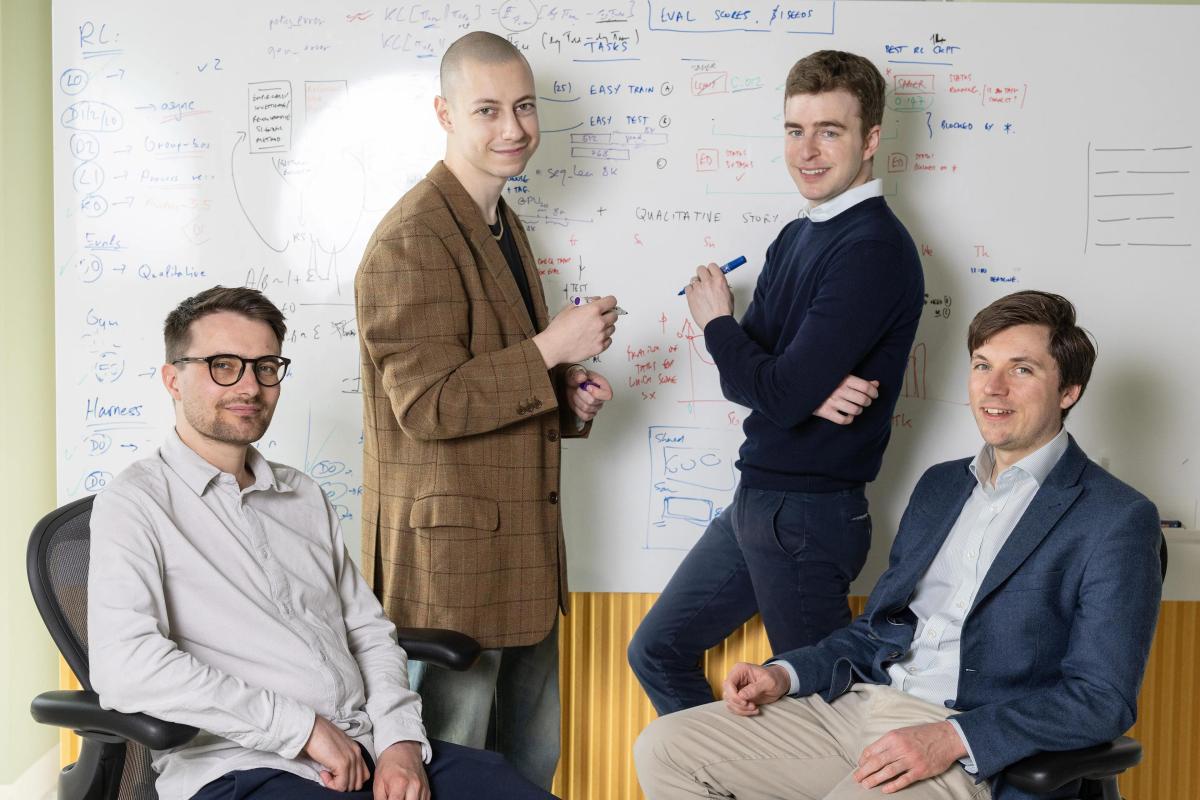
British artificial‑intelligence startup Inherent was founded in 2024 by a group of former DeepMind researchers eager to push AI beyond chat and into the lab. In August the company unveiled Faraday, an AI “teammate” designed to replicate the methodology and results of scientific publications.
To gauge Faraday’s capabilities, Inherent ran a head‑to‑head benchmark against comparable models from Anthropic and OpenAI. The test set comprised 50 peer‑reviewed papers spanning biology, physics and chemistry, and measured how accurately each system could reproduce the experimental protocol, data analysis and final conclusions. Faraday achieved an average replication accuracy of 92 %, while Anthropic scored 78 % and OpenAI 81 %.
Beyond raw numbers, Faraday offers a suite of auxiliary features: it can generate detailed experimental designs, suggest relevant data sets, flag potential sources of error, and even draft concise summaries for grant applications. Researchers who have trialed the system say it dramatically shortens the time needed to validate prior work and helps identify reproducibility gaps.
CEO Dr. Maya Patel stressed that Faraday is an assistant, not a replacement for human scientists. “Critical thinking, hypothesis formulation and ethical oversight remain firmly in the human domain,” she said. Inherent plans to make Faraday accessible via an open API and is already negotiating partnerships with several universities to keep the model continuously updated with the latest literature.
If adopted widely, Faraday could become a turning point for AI‑driven research, streamlining peer‑review, accelerating discovery pipelines, and raising the overall reliability of scientific output.
Source: TechCrunch
 ETİKETLER
 BENZER İÇERİKLER
 OKUYUCU YORUMLARI
Inherent’s Faraday AI outperforms Anthropic and OpenAI in scientific paper replication









Yorum Yaz