
Sitemize üye olarak beğendiğiniz içerikleri favorilerinize ekleyebilir, kendi ürettiğiniz ya da internet üzerinde beğendiğiniz içerikleri sitemizin ziyaretçilerine içerik gönder seçeneği ile sunabilirsiniz.
Sitemize üye olarak beğendiğiniz içerikleri favorilerinize ekleyebilir, kendi ürettiğiniz ya da internet üzerinde beğendiğiniz içerikleri sitemizin ziyaretçilerine içerik gönder seçeneği ile sunabilirsiniz.
Üyelerimize Özel Tüm Opsiyonlardan Kayıt Olarak Faydalanabilirsiniz
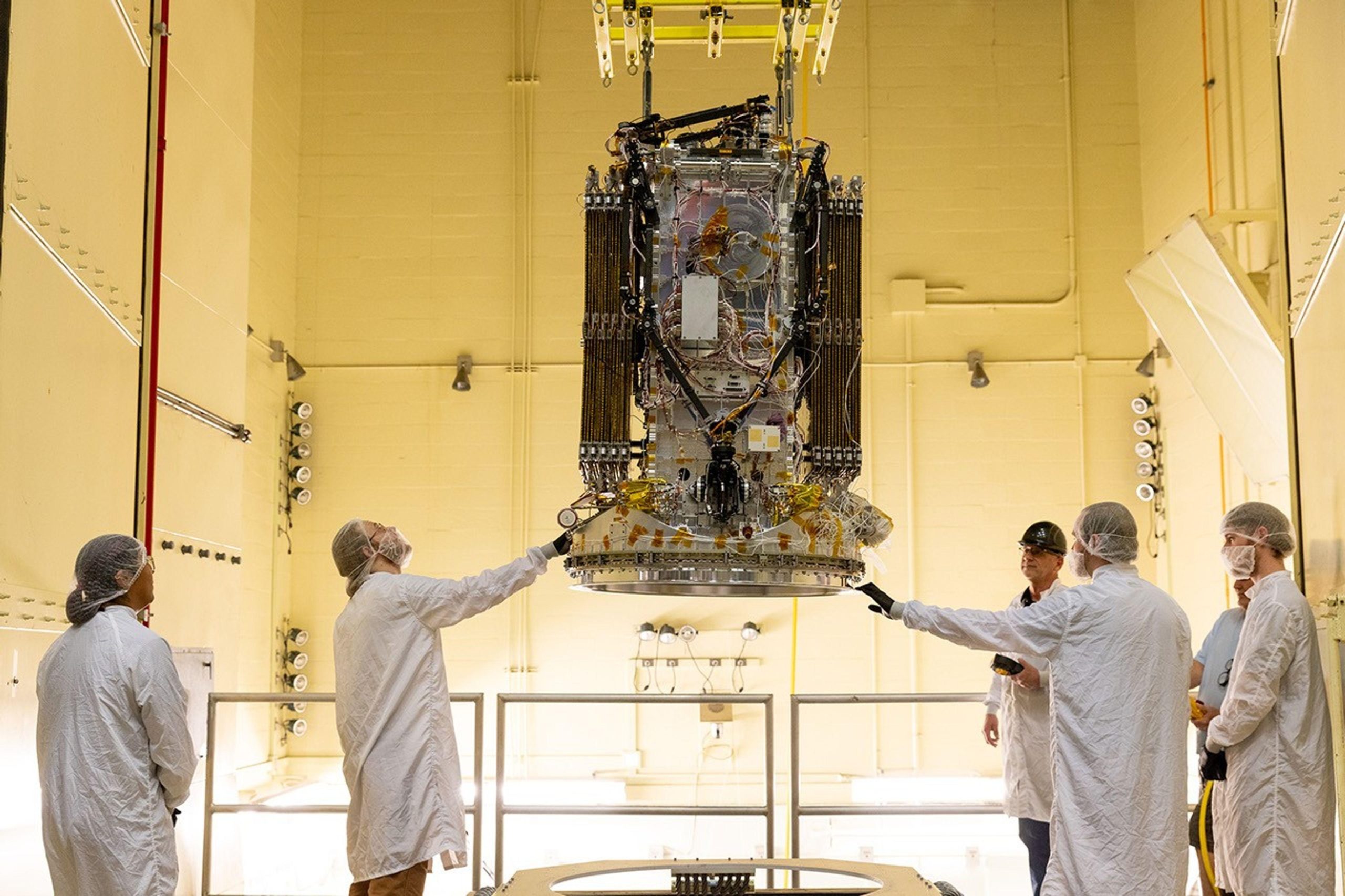
The Swift Observatory, launched in 2004 to monitor gamma‑ray bursts and other high‑energy cosmic events, has been drifting to a dangerously low orbit due to a series of intense solar storms. Scientists warned that if nothing is done, the satellite could plunge into Earth’s atmosphere and burn up as early as this year. Faced with that prospect, NASA quickly devised an emergency rescue plan.
The agency turned to Katalyst Space Technologies, a private‑sector aerospace firm, to develop a rapid‑response spacecraft capable of nudging Swift back to a safer altitude. The resulting vehicle, named Link, lifted off on Friday aboard a small launch vehicle and is now on a trajectory toward the aging observatory.
Link’s design focuses on light weight, high‑efficiency propulsion and precise navigation. Its ion thrusters can deliver a gentle but continuous thrust, while its guidance system ensures a close approach to Swift without risking a collision. By raising Swift’s perigee, the mission aims to reduce atmospheric drag and give the satellite several more years of scientific operation.
Pre‑flight simulations showed that Link could reach Swift within a few hours after launch, perform a series of carefully timed burns, and then detach, leaving Swift in a higher, more stable orbit. NASA officials said the successful execution of this maneuver would not only save a valuable scientific asset but also demonstrate a new model for on‑orbit servicing and emergency response.
If all goes as planned, Swift will continue to deliver data on gamma‑ray bursts, supernovae, and other transient phenomena, while the Link mission showcases how commercial partners can augment NASA’s capability to protect critical space infrastructure.
Source: The Verge
 ETİKETLER
 BENZER İÇERİKLER
 OKUYUCU YORUMLARI
NASA Launches Emergency Mission to Rescue Swift Observatory









Yorum Yaz