
Sitemize üye olarak beğendiğiniz içerikleri favorilerinize ekleyebilir, kendi ürettiğiniz ya da internet üzerinde beğendiğiniz içerikleri sitemizin ziyaretçilerine içerik gönder seçeneği ile sunabilirsiniz.
Sitemize üye olarak beğendiğiniz içerikleri favorilerinize ekleyebilir, kendi ürettiğiniz ya da internet üzerinde beğendiğiniz içerikleri sitemizin ziyaretçilerine içerik gönder seçeneği ile sunabilirsiniz.
Üyelerimize Özel Tüm Opsiyonlardan Kayıt Olarak Faydalanabilirsiniz
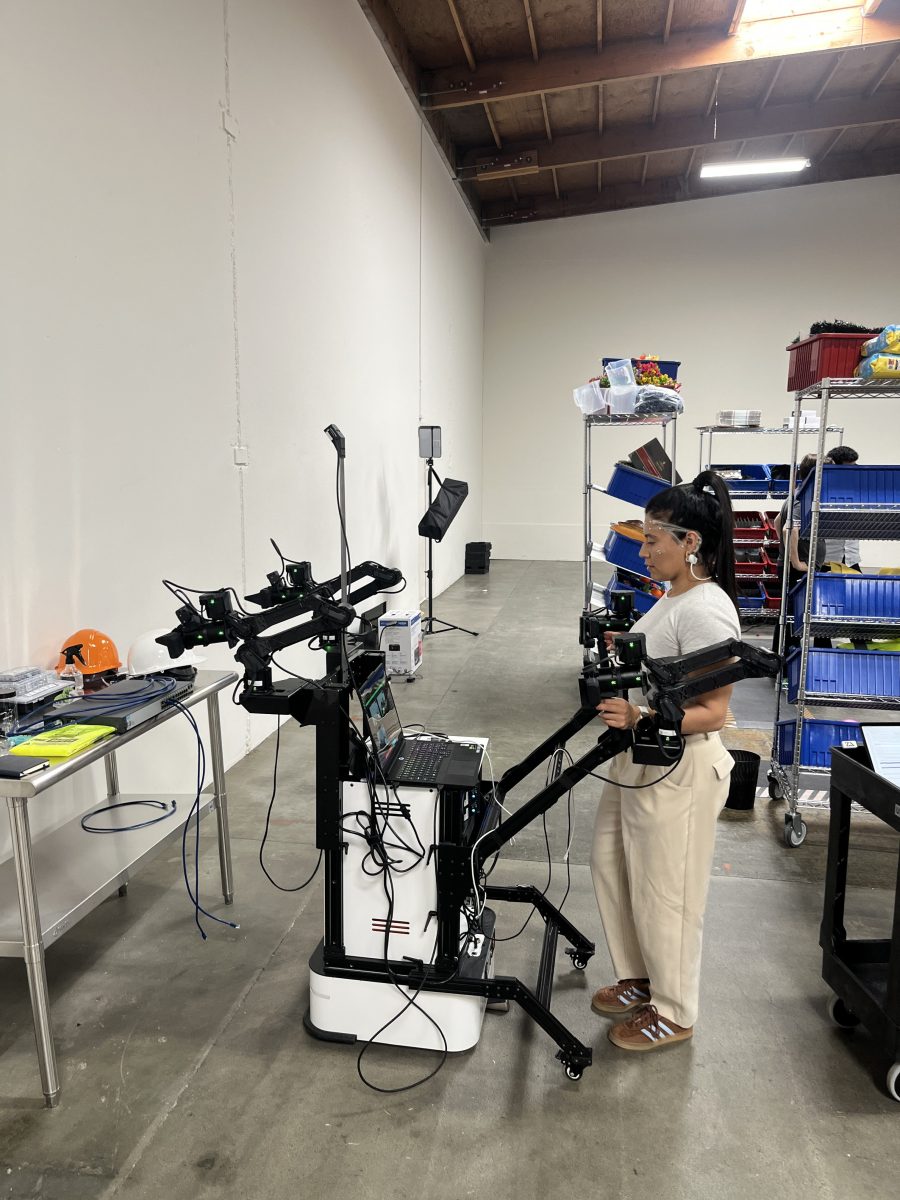
Physical artificial intelligence – the branch of AI that powers robots, drones and other tangible systems – has long relied on visual streams captured from many angles and painstakingly annotated data. Those pipelines let machines learn the shape, motion and affordances of real‑world objects, yet they still fall short of the way humans intuitively understand their surroundings.
To close that gap, researchers are stacking more cameras, increasing frame rates, and applying ultra‑dense labeling to every pixel. While this approach dramatically improves 3D reconstruction and manipulation accuracy, it is expensive, time‑consuming, and ultimately limited to what can be seen. A new wave of experiments is turning to brain activity, measured with electroencephalography (EEG), as an additional source of information. When a person watches or interacts with an object, characteristic electrical patterns emerge in the cortex that encode shape, motion intent, and even subtle expectations.
Integrating those patterns into physical AI models could give robots a “thought‑augmented” perception layer. Imagine a tele‑operated arm that not only follows the operator’s hand movements but also reads the operator’s EEG to infer how firmly to grip a fragile item or which direction to nudge a part. Early prototypes have shown that fusing EEG signals with visual and tactile streams can raise prediction accuracy by roughly 10‑15 percent, especially in ambiguous scenarios.
The challenges are far from trivial. Brain‑wave data is noisy, low‑resolution, and highly individual, demanding sophisticated real‑time filtering and personalization algorithms. Privacy and data‑security concerns also loom large when neural signals become part of a machine‑learning pipeline.
Nevertheless, tech companies, university labs, and research institutes are launching joint projects to merge brain‑machine interfaces (BMIs) with physical AI. If these collaborations succeed, the next generation of robots may act not only on what they see but also on what humans intend, bridging the gap between perception and purpose. While brain‑wave integration is still in its infancy, its potential to unlock a deeper, more intuitive form of physical AI could mark a pivotal shift in how machines learn to navigate the real world.
Source: TechCrunch
 ETİKETLER
 BENZER İÇERİKLER
 OKUYUCU YORUMLARI
Brain Waves Could Be the Next Breakthrough for Physical AI









Yorum Yaz